unseen, seen
Surinde Staetenburg
Antwerp, Belgium
About
After earning her Bachelor's degree in Communication Management and on in Interactive Multimedia Design, Surinde Staetenburg began working in communication for various cultural organizations, ranging from Tourism Lier and Tourism Antwerp to the Rubenshuis and the DIVA Museum. She combined this with her further studies in communication and graphic design.
Project
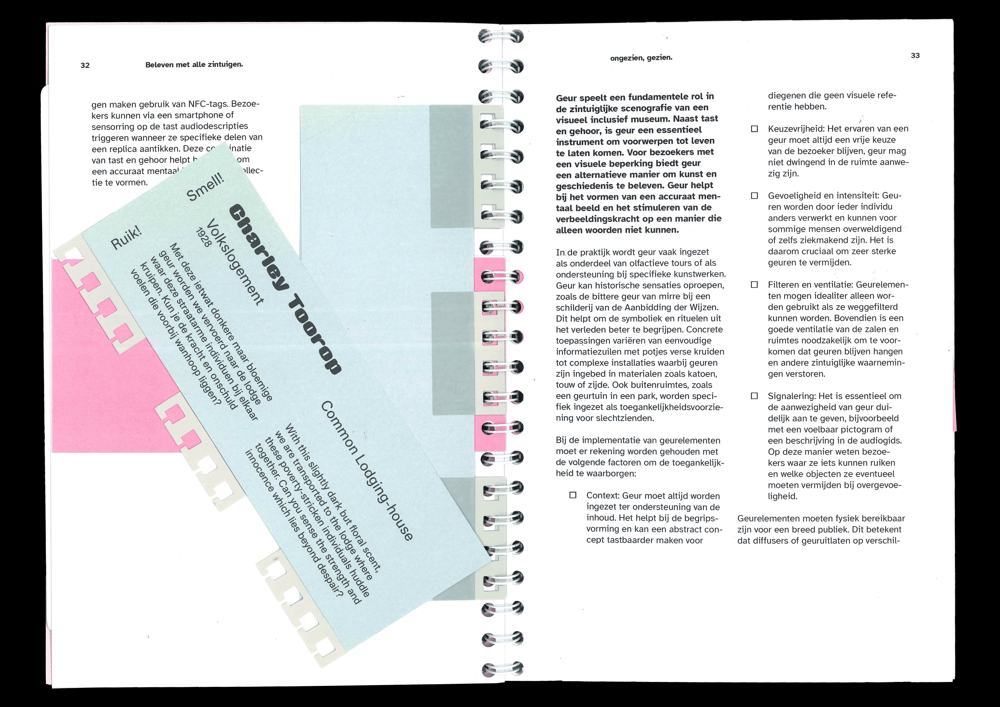
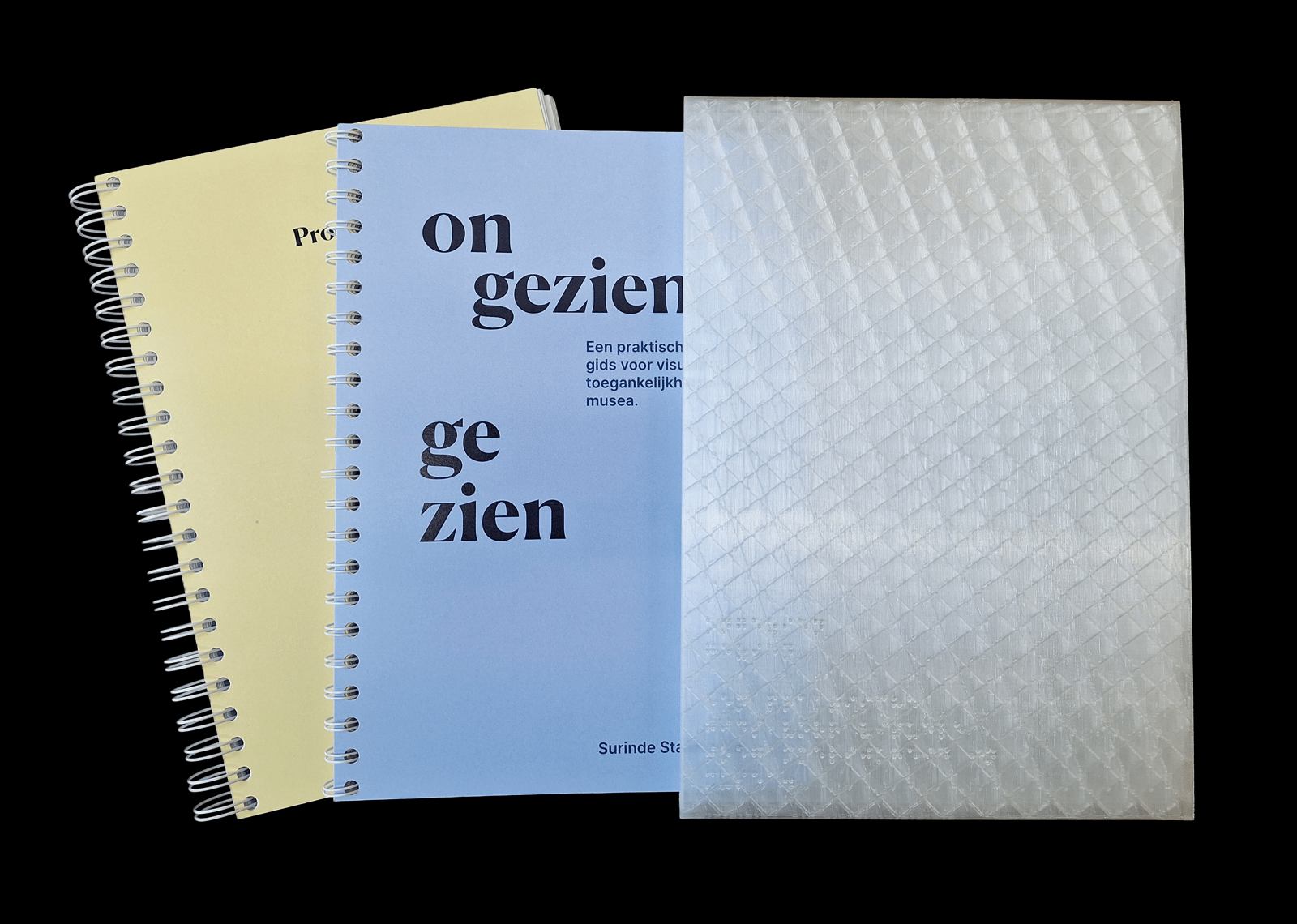
"unseen, seen" originated from the research question: "How can museums become accessible to people with a visual impairment?". This practical guide supports museum communication and public relations staff in making their museum visually accessible. This publication is based on the principle that accessibility is not special treatment, but an enrichment of the museum experience for everyone. By focusing on clear communication, multisensory experiences, and well-thought-out scenography, a museum can evolve into a visually inclusive place where culture is truly shared.
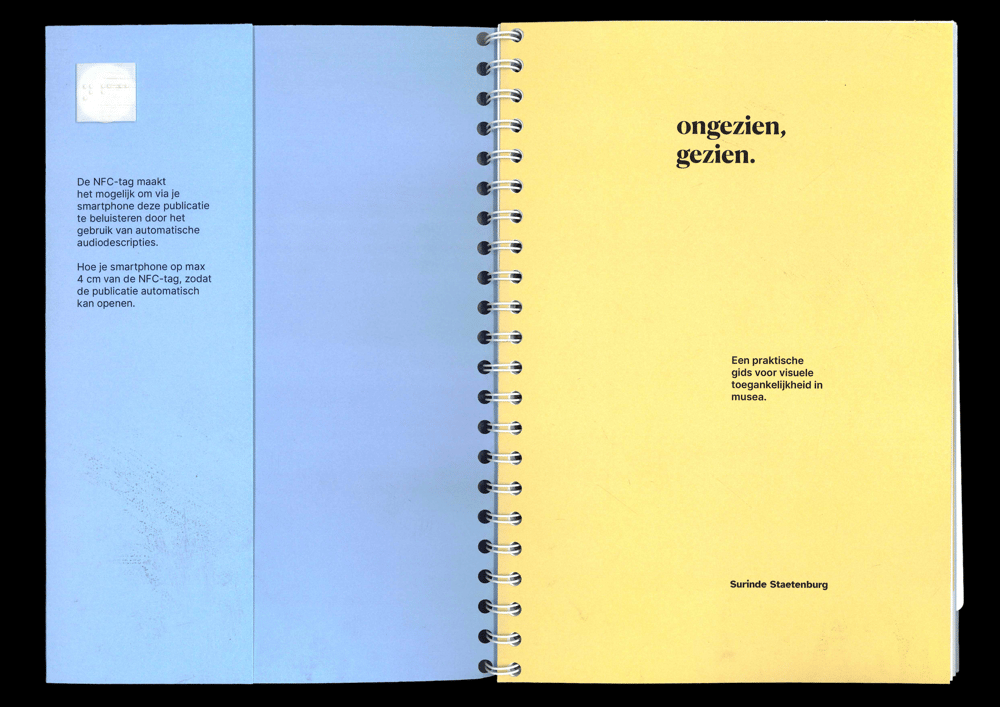
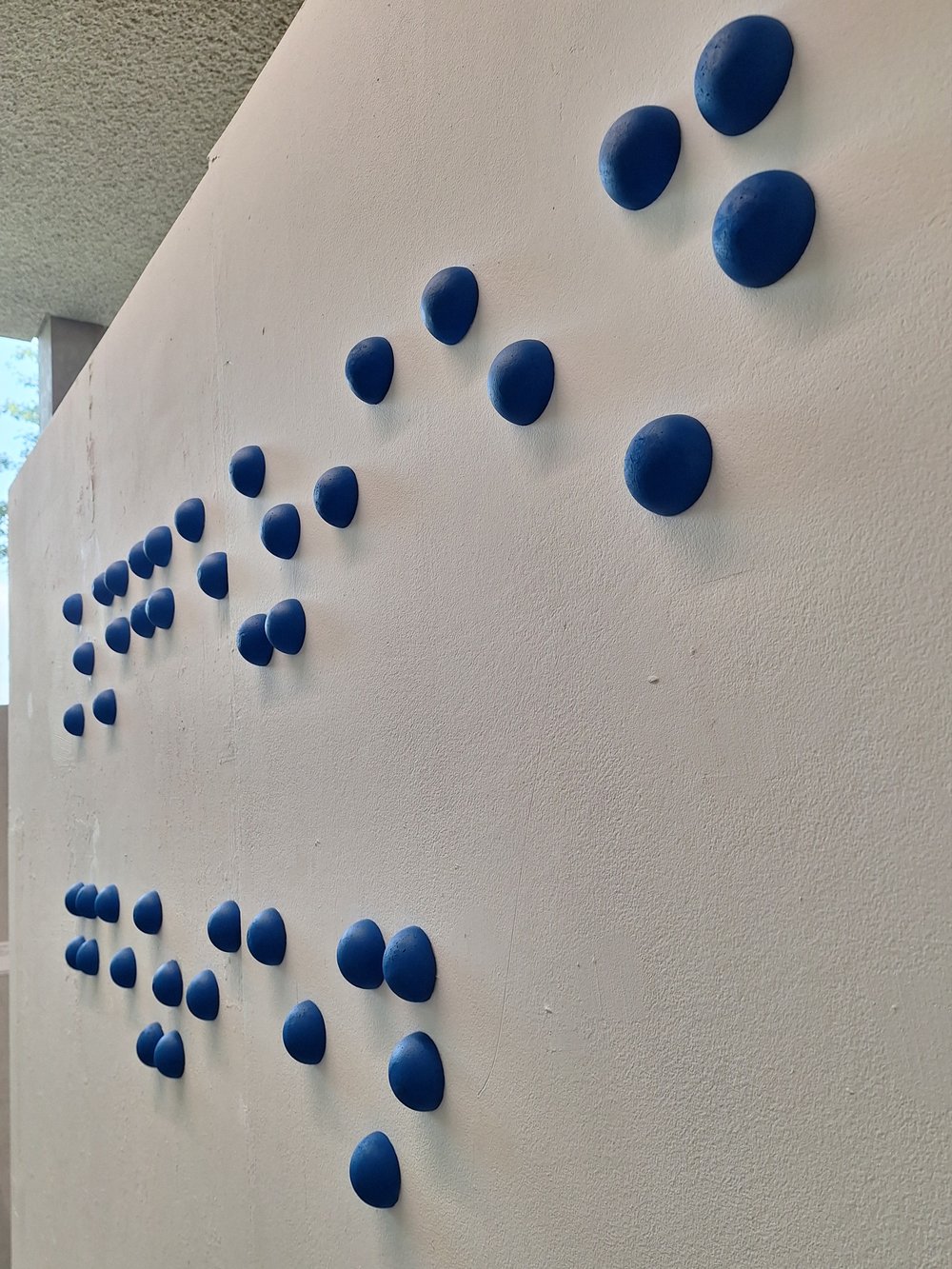
The publication consists of six chapters, which address various aspects of making the museum experience accessible. Through the use of NFC tags, an accessible variant of a QR code, the entire publication can be listened to.
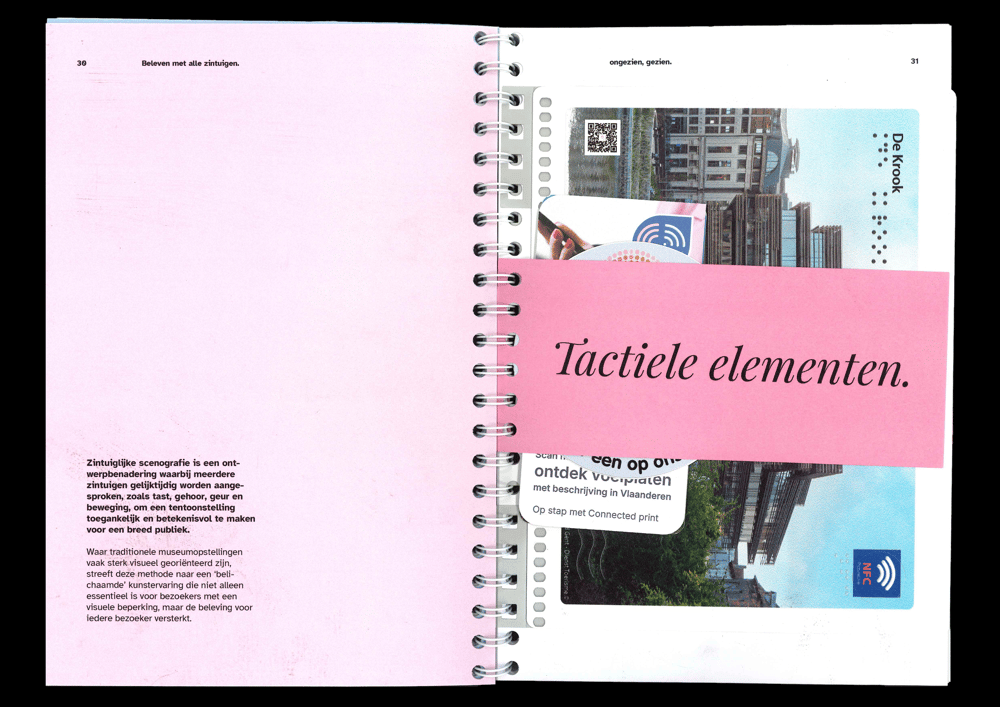
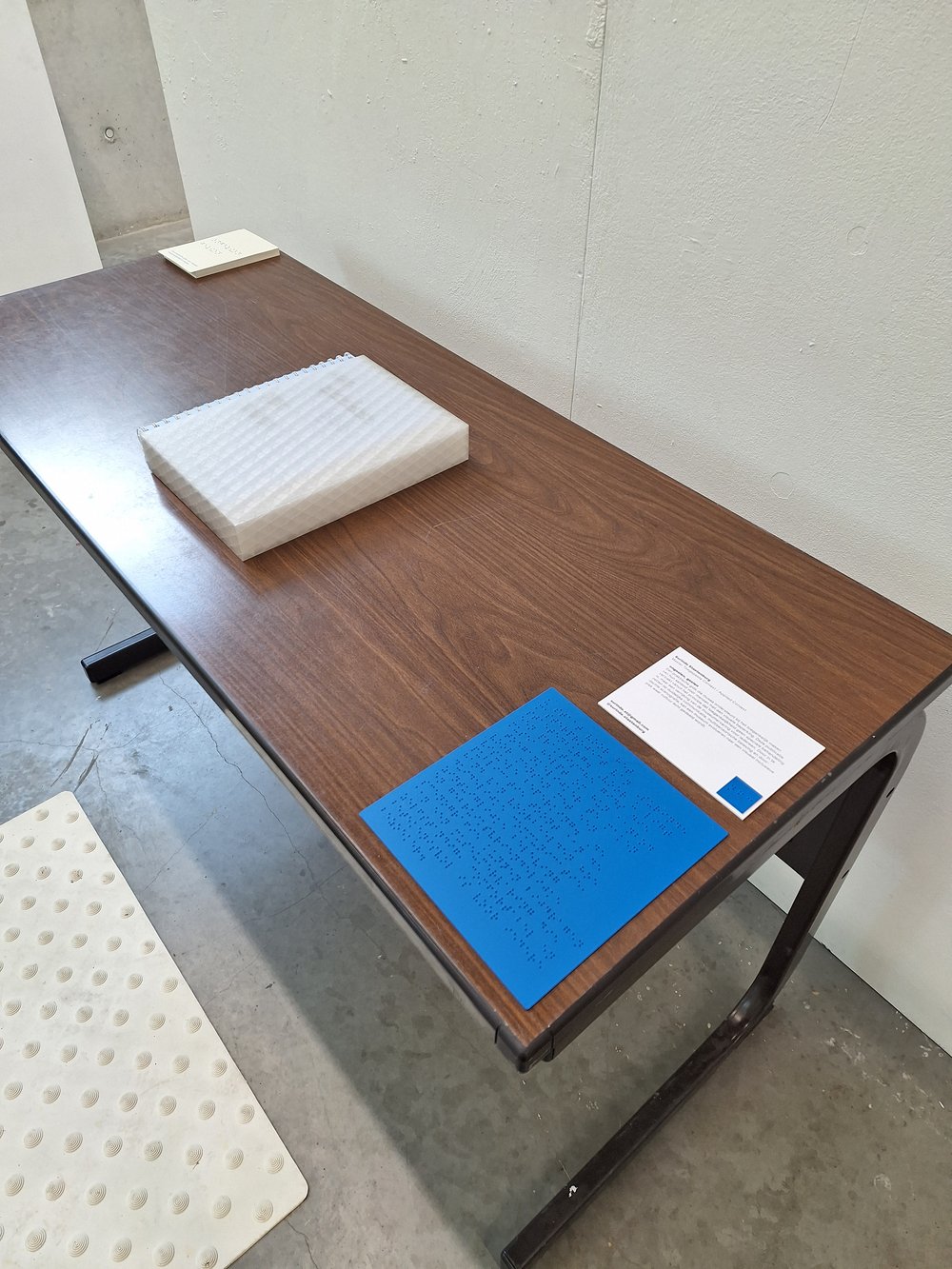
The first chapter explains what an accessible approach entails, followed by a chapter that explains the diverse nature of visual impairments. The third chapter offers a brief guide for training staff on how to interact with the target group. The two subsequent chapters discuss concrete ways to optimize both the print and digital environments. The final chapter focuses on multisensory elements and explains how these can contribute to visual accessibility and how they should be implemented.
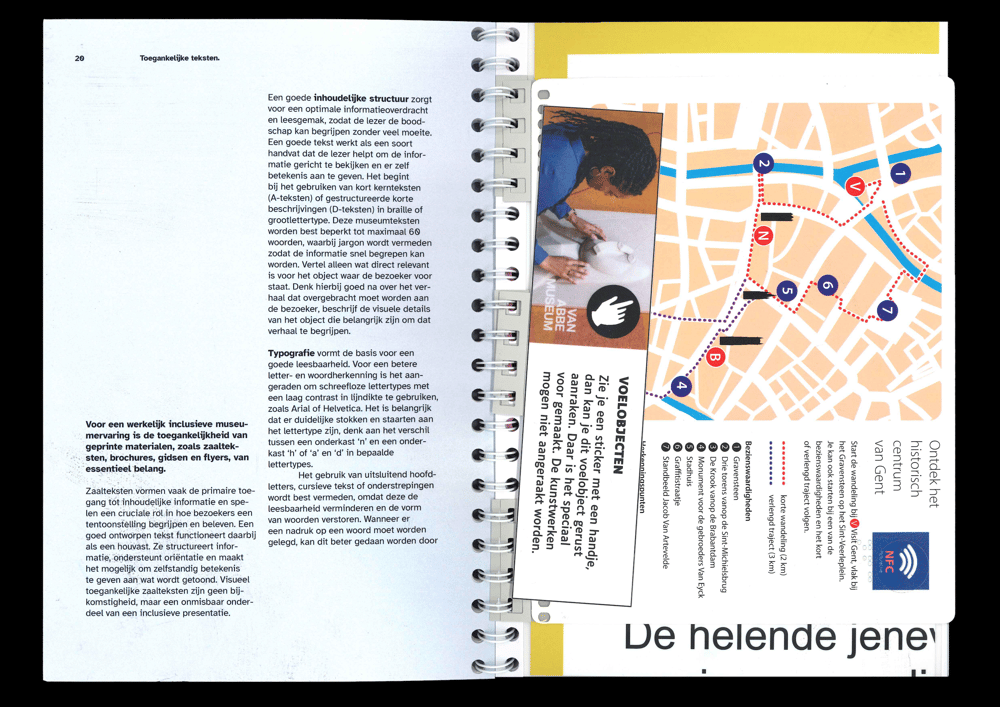
Each chapter contains concrete examples showing what visual inclusion can look like in practice. These examples were collected during research into visual accessibility by visiting various museums.