
The eye that never sleeps
Elfie Serafeidou
Antwerp
About
I am an artist working across video, installation, and mixed media. My practice moves between the personal and the political, exploring how memory, identity, and perception are shaped by the systems and structures that surround us.
My earlier work engaged with abstract form, texture, and materiality, using layered compositions and experimental techniques to evoke emotion and the subconscious. Over time, my practice has shifted toward more immersive and conceptually driven work, driven by a growing interest in how power operates invisibly in everyday life.
My current research focuses on surveillance capitalism. How digital technologies extract, predict, and manipulate human behaviour often without our awareness. Working with the visual language of 1970s institutional aesthetics, I examine what connects the blunt machinery of Cold War-era state control to the seamless, algorithmic watching of the present.
I am currently studying at KDG Sint Lucas Antwerpen.
Project
The Eye That Never Sleeps
Single screen video, 2026
Elfie Serafeidou
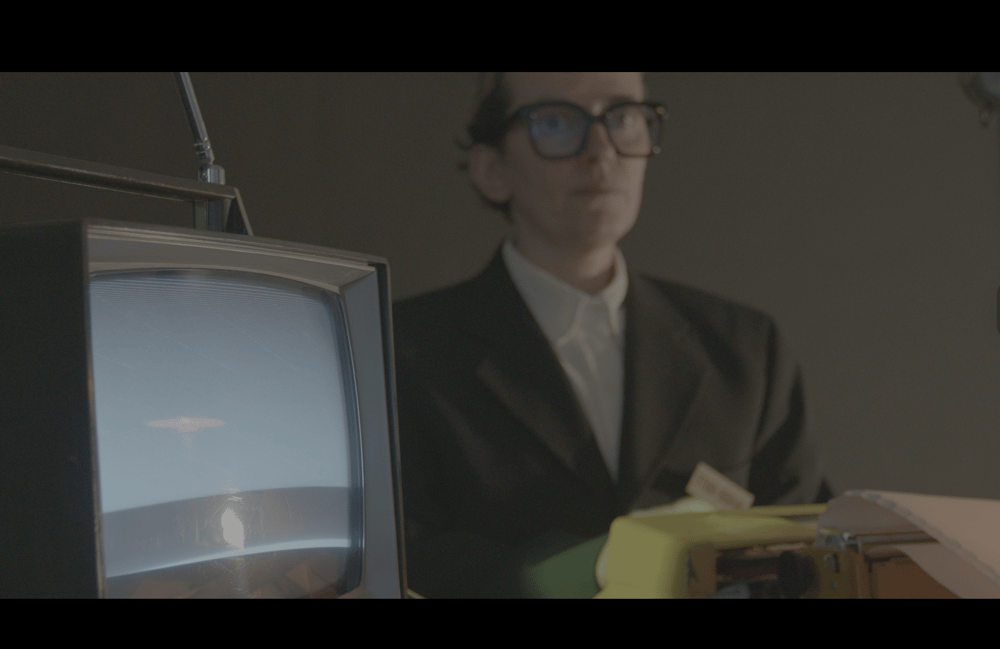
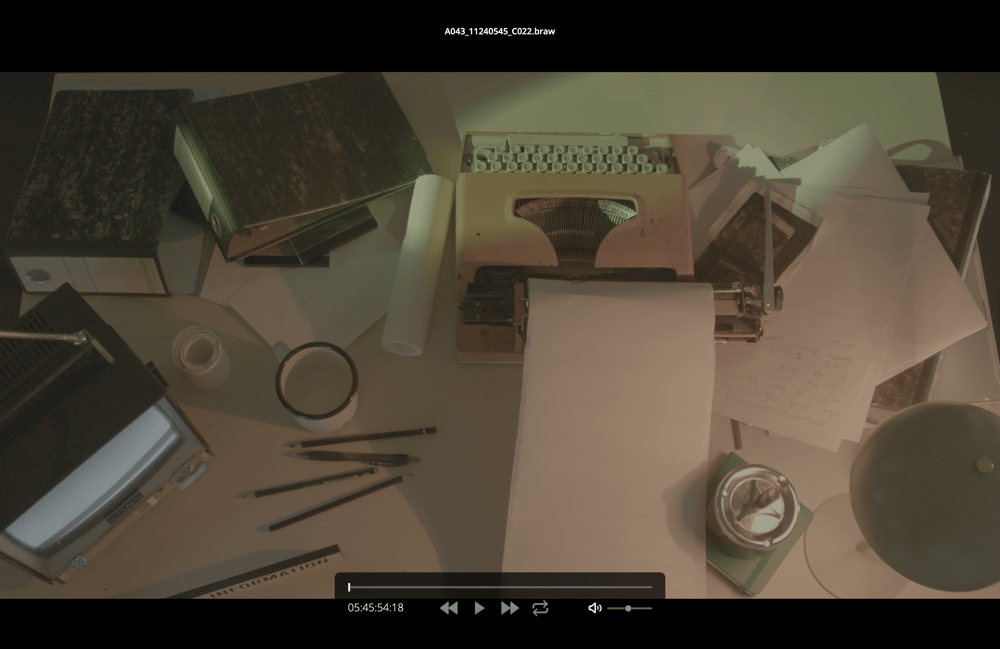
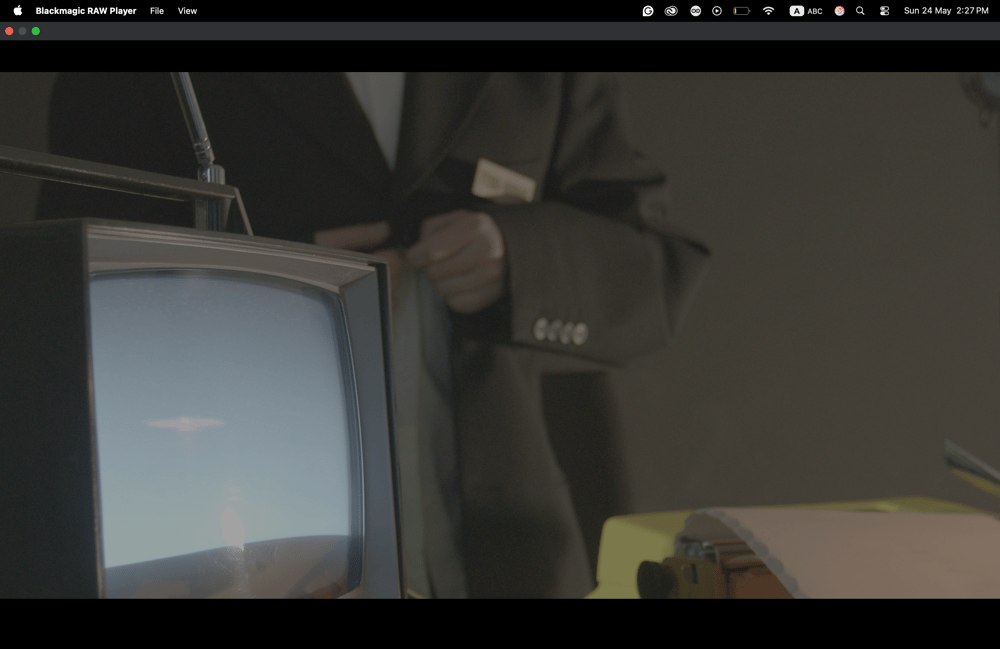
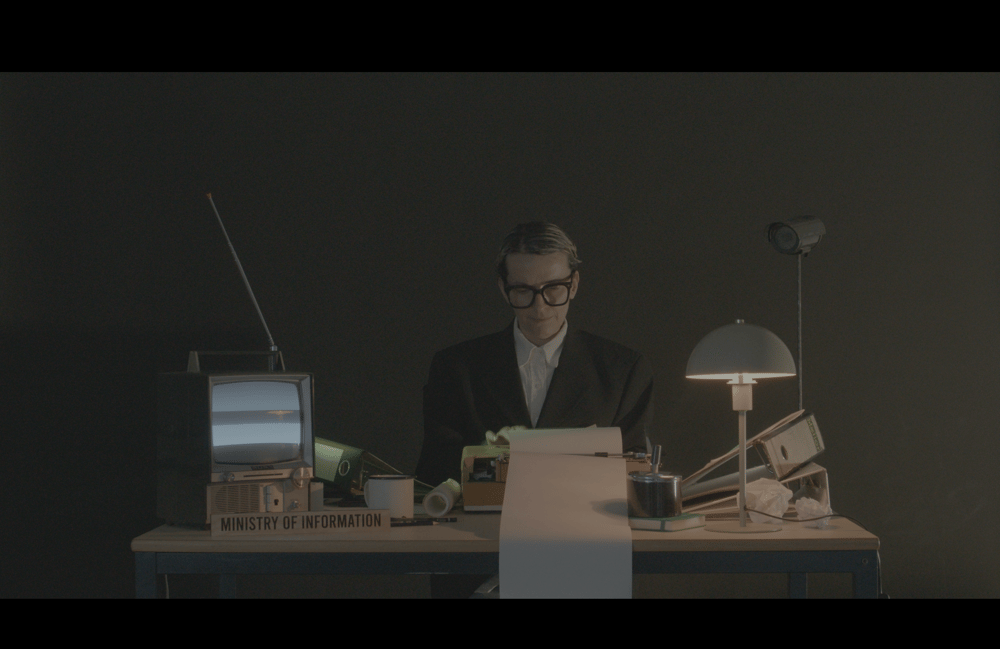
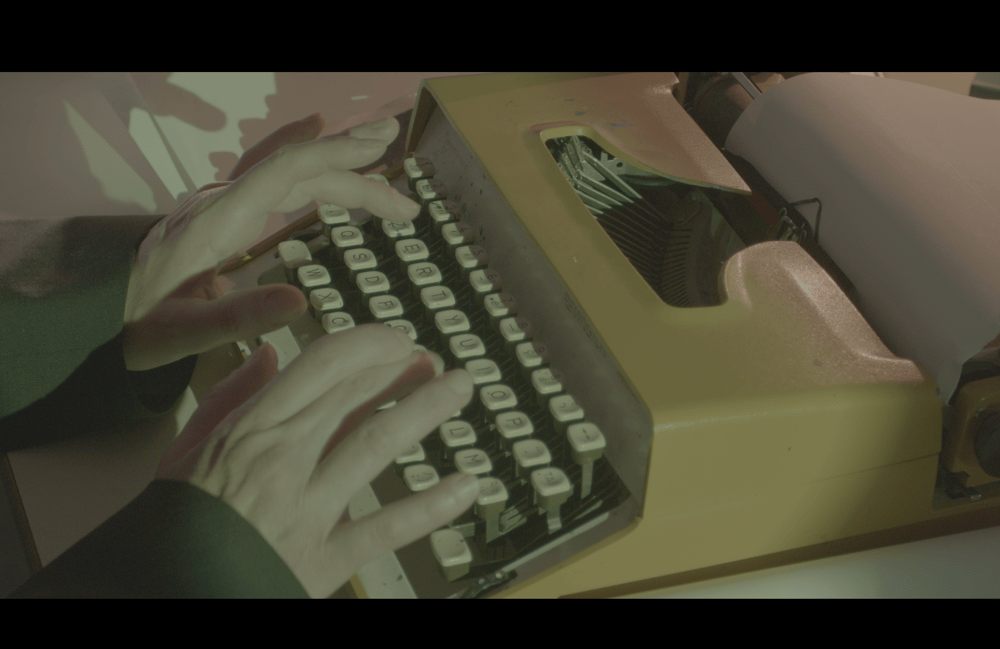
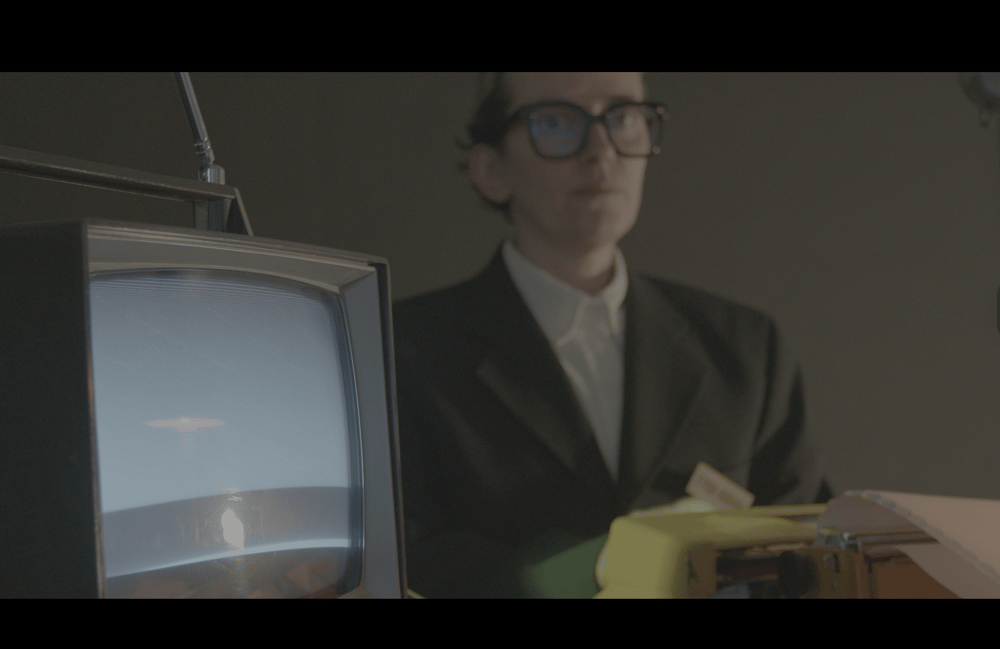
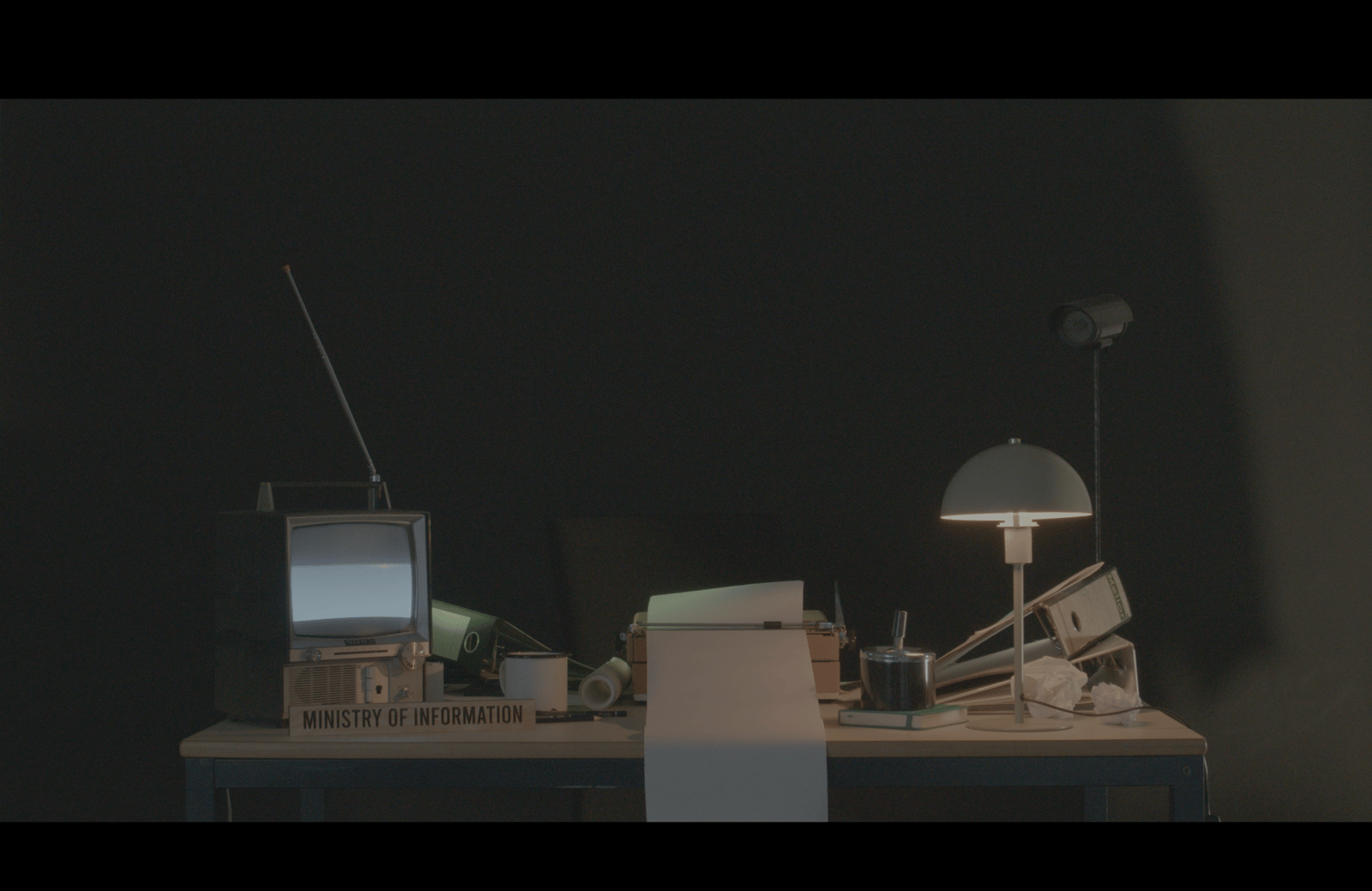
The Eye That Never Sleeps stages a bureaucratic encounter in a 1970s setting, a figure, a desk, paperwork, and a surveillance camera watching from behind. The work draws on the visual language of Cold War-era monitoring and state control, recreating an aesthetic of institutional observation that feels both historical and uncomfortably present.
The piece sits within a broader research into surveillance capitalism, how large corporations extract personal data, predict behaviour and psychological states, and quietly manipulate and control populations, often against people's own interests. What began as the blunt, visible machinery of 1970s state surveillance has evolved into something far more intimate and invisible: algorithms that know you better than you know yourself, attention economies designed to keep you anxious and scrolling, systems that turn your inner life into data and your data into profit.
By returning to the analogue aesthetics of an earlier era of watching, the work asks a simple and unsettling question: what has actually changed? The technology became seamless. The social inequality it produces has become structural. The democratic foundations that it erodes became harder to name and harder to defend.
The camera in the frame is not hidden. It never was. We just stopped noticing it.